
NEWS
E30 Petrol Launch Date in India: What the Latest BIS Notification Really Means

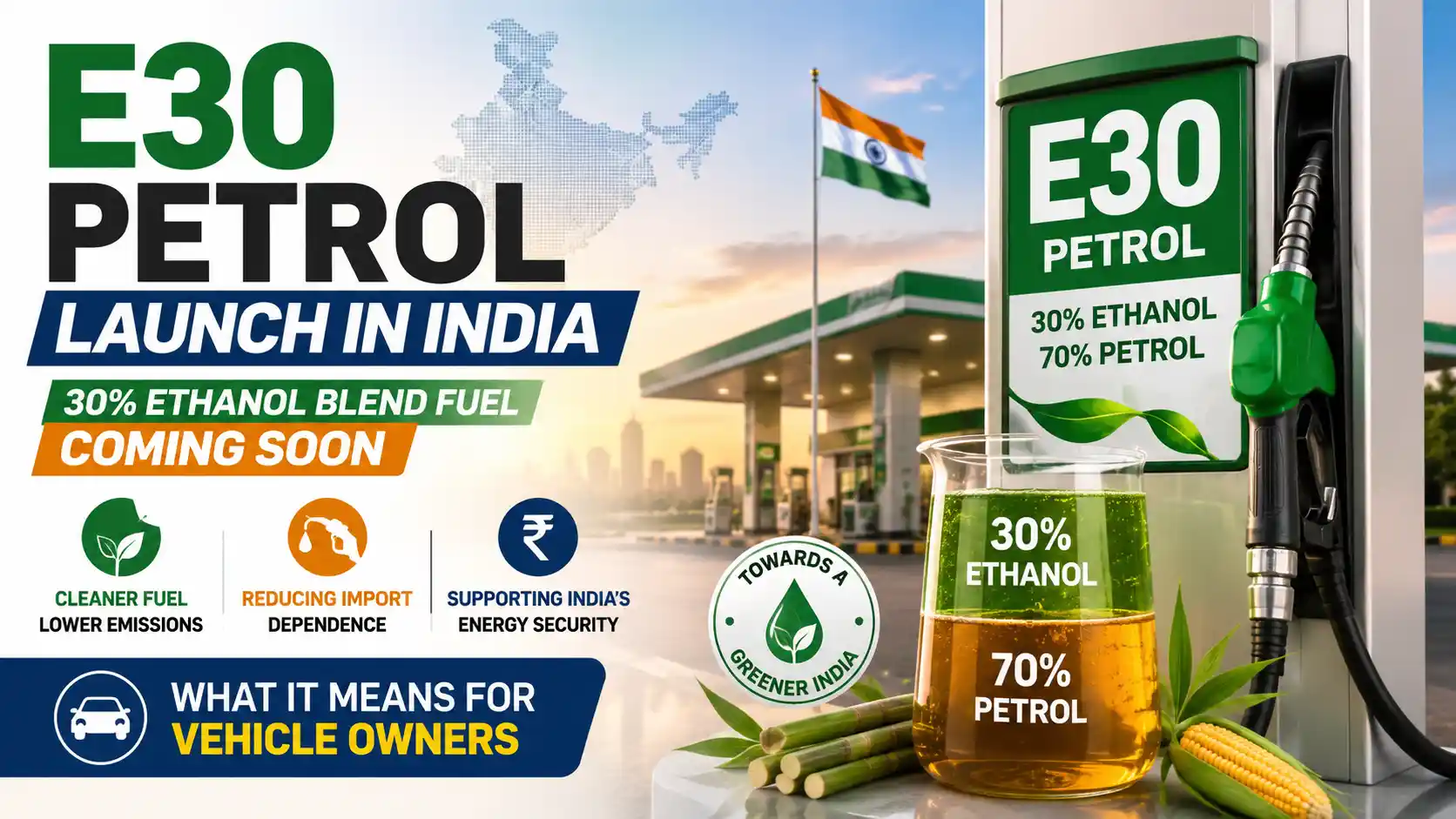
India’s biofuel push has reached a new milestone, and if you’ve been searching for the E30 petrol launch date in India, here’s the complete picture based on the most recent government notification.
BIS Notifies E30 Petrol Standards
The Bureau of Indian Standards (BIS) has officially notified technical specifications for higher ethanol-blended petrol, including E22, E25, E27, and E30, under a new standard called IS 19850:2026. According to the notification, the standard came into effect on 15 May 2026, with the formal Gazette notification issued shortly after on 18 May 2026.
In simple terms, E30 refers to petrol that contains 30% ethanol blended with regular petrol, while the fuel currently sold across most of the country, E20, contains 20% ethanol.
So, Is E30 Petrol Available Now?
This is the part that’s creating a lot of confusion online, so let’s clear it up. The notification does not mean E30 petrol is now available at your local pump. As multiple reports have clarified, the BIS notification does not mean immediate nationwide sale of E30 petrol. Instead, it simply sets the technical groundwork that automakers, fuel companies, and distribution networks need so they can plan for higher-blend compatibility in advance.
In other words, this is a regulatory and preparatory step, not a launch announcement for consumers.
Expected E30 Rollout Timeline
So when can Indian drivers actually expect to see E30 at fuel stations? Based on industry estimates, India’s E30 target of 30% ethanol blending is expected to roll out sometime between 2028 and 2030, and the exact timing will depend on how ready the country’s fuel infrastructure and ethanol supply chains are by then.
For context on how fast this space is moving, India had already crossed close to 20% ethanol blending by the end of January 2026, achieving the E20 target ahead of its original schedule.
Why Is India Pushing E30 Petrol?
The push toward higher ethanol blends isn’t just about fuel efficiency — it’s part of a much larger energy strategy. Some of the key reasons behind this shift include:
- Reducing India’s dependence on crude oil imports, which cost the country billions of dollars every year
- Supporting domestic ethanol producers, especially sugar mills and, increasingly, maize-based ethanol plants
- Lowering vehicle emissions as part of India’s long-term clean energy goals
- Building energy security amid global oil price volatility
Interestingly, the source of ethanol itself is also changing. Maize has now overtaken sugarcane as India’s largest ethanol feedstock, contributing nearly half of the country’s total ethanol supply in the latest supply year.
What Does This Mean for Your Vehicle?
If you’re wondering whether your car or bike will need any changes, here’s the reassuring part for now — nothing changes immediately. Most new vehicles sold in India today are already engineered to run on E20 fuel, but moving up to E22, E25, E27, or E30 is a more significant engineering step for automakers, since it can affect engine components, seals, and fuel system materials over time.
Expect automakers to gradually introduce E30-compatible models in the coming years as the fuel itself becomes commercially available, likely starting in states that already lead in ethanol production.
The Bigger Picture
This notification fits into India’s broader Ethanol Blended Petrol (EBP) Programme, which has been one of the country’s most aggressive energy policy pushes over the last decade. The original target of 20% blending by 2030 was achieved years ahead of schedule, and the E30 standard signals that policymakers are already preparing for the “next phase” before the current one is even fully rolled out nationwide.
Bottom Line
To sum it up: there is no fixed nationwide E30 petrol launch date in India yet. What has happened is that BIS has notified the technical standards (IS 19850:2026) effective from 15 May 2026, paving the way for E30 fuel to be introduced sometime in the 2028–2030 window. Until then, E20 remains the standard fuel across most of the country.
We’ll keep this article updated as soon as there’s an official rollout date or pilot launch announcement from the government or oil marketing companies.
